Repeated backups in the same drain
We cut the entire root mass out with a rotary chain cutter and then jet the line so nothing is left to snag debris. The pipe goes back to full diameter, not a pinhole, and the camera footage proves it.
Tree Root Removal by Hydro Jetting in Montebello is how we clear roots from your sewer line without digging up your yard. If your drains gurgle, back up, or smell like a swamp, roots have found a crack and moved in. We cut them out with a rotary chain cutter, flush the line with a high-pressure sewer jetter, and show you the camera footage before and after. Same-day root cutting in Montebello, CA, seven days a week.
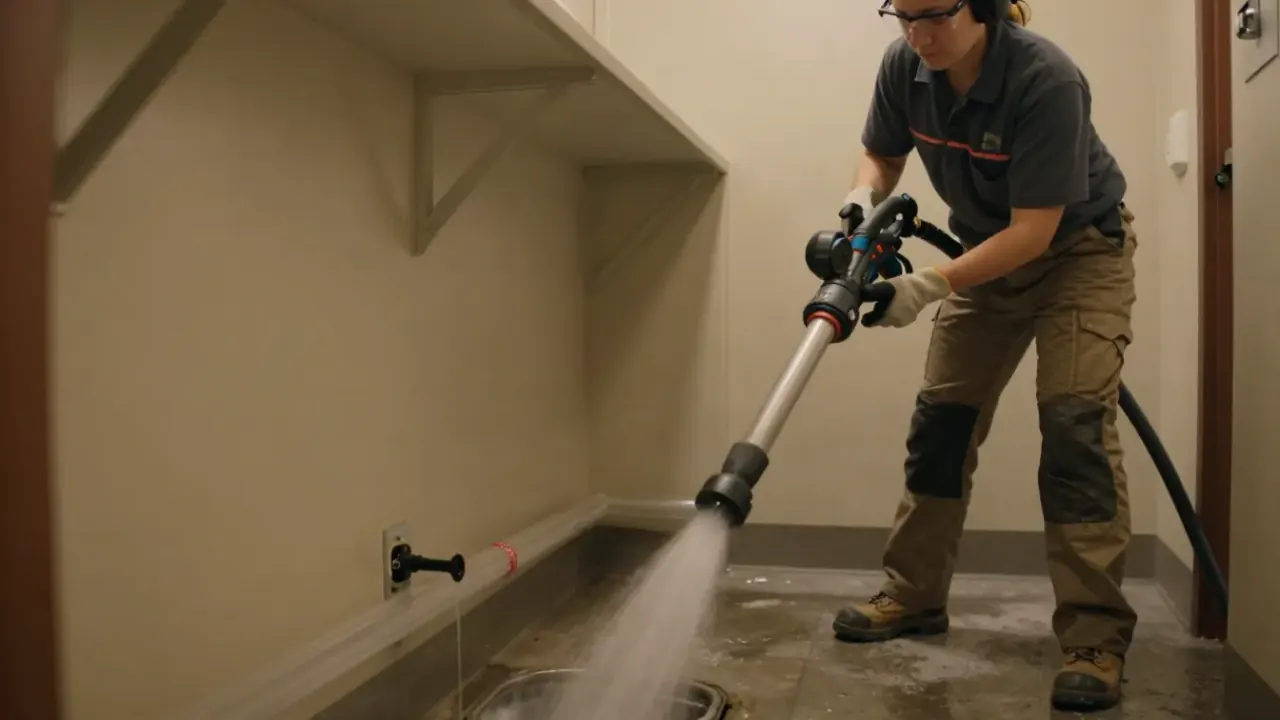
Tree Root Removal by Hydro Jetting in Montebello is a two-stage sewer service that cuts roots out of the pipe and then scours the line clean. We run a rotary chain cutter on a steel cable through the lateral to slice through the root mass, then follow with a high-pressure sewer jetter pushing 3,000 to 4,000 PSI through a jetting nozzle to flush the cuttings, grease, and scale out to the main. A sewer camera goes in before and after so you see exactly what came out of your line.
Montebello's housing stock is the reason we run this call so often. The 1940s to 1960s cast iron and Orangeburg laterals under Montebello Hills and Downtown Montebello have been in the ground 60 to 80 years, and clay soil shifts with every wet winter. Ficus, sycamore, and Brazilian pepper roots find the joints and hairline cracks, then grow into a mat that catches everything you send down the drain. When you search tree root removal near me Montebello at 9 p.m. with a backed-up laundry line, that mat is usually the culprit.
Every root job is quoted from camera footage, so what you pay for is what your line actually needs. The core package below covers the standard residential lateral. Spot repairs, pipe patching, and full replacement are quoted separately if the camera shows structural damage.
A full pass down the lateral before any cutting, with the footage recorded and shared. We locate the root intrusion, note its distance from the cleanout, and check for cracks, bells, and corrosion that would change the plan.
The root mass is cut away from the pipe walls with a rotary chain cutter on a sectional cable. We work the cutter until the line is fully open, then pull it and inspect the chain for wear before moving on.
A high-pressure sewer jetter at 3,000 to 4,000 PSI flushes the cuttings, grease buildup, and scale out to the city main. Nozzle size is matched to your pipe diameter so the walls get scoured without stressing the joints.
A second camera pass confirms the line is clear and records the result. You get a copy of both videos, which is useful documentation if you ever sell the property or file an insurance claim.
We cap the cleanout, rinse the work area, and leave the property the way we found it. Any debris pulled from the line is bagged and removed, not left in your yard or on the parkway.
You receive a short written summary of what we found, what we cleared, and what to watch for, plus a 90-day warranty on the cleared section. If roots regrow through the same cut in that window, we come back and re-cut at no charge.
We pull the cleanout cap and run a sewer camera down the lateral to find the root intrusion, measure how far in it sits, and check the pipe's condition. This takes 15 to 25 minutes and tells us whether the line can be cut or needs a spot repair first. You watch the screen with us.
A rotary chain cutter on a sectional cable goes down to the root mass and spins through it. We work the cutter back and forth until the line is open, usually 30 to 60 minutes depending on how dense the mat is. Cast iron and clay pipe both handle this fine when the pipe is structurally sound.
Next comes the high-pressure sewer jetter. We push 3,000 to 4,000 PSI through a jetting nozzle with rear-facing ports to flush the cuttings, grease buildup, and scale out to the city main. On a 4-inch lateral that is 40 to 80 feet of pipe, this stage runs 20 to 40 minutes.
We run the camera again and record the result. You see the pipe walls, the joints, and any remaining defect. If we spot a cracked joint or a bellied section, we tell you straight and quote the repair before we leave the property.
We flush the area, cap the cleanout, and hand you the footage plus a written summary of what we found and what to watch for. Total on-site time is typically two to four hours. Payment is due when the work is done, and the warranty starts that day.
Purpose-built equipment, used by trained technicians — so the job is done accurately the first time.
Our primary flush tool, delivering 3,000 to 4,000 PSI through matched nozzles to clear cuttings, grease, and scale from residential and commercial lines.
The cutting head that spins through root masses inside the pipe. Sized to the lateral diameter so it slices roots without scoring sound pipe walls.
Used before and after every root job to locate the intrusion, verify the result, and record footage you keep for your records.
Rated hose on a powered reel lets us feed 80 to 150 feet of line into a lateral without kinking, which keeps pressure steady at the nozzle.
Rear-facing and penetrating nozzles matched to pipe size. The right nozzle scours the walls instead of just punching a channel through the middle.
Our sectional cables, cutters, and cameras come from RIDGID and Spartan Tool, with General Pipe Cleaners gear on backup. These hold up to daily use.
We watch pressure at the pump on every run. A sudden drop tells us the nozzle hit a break or a heavy bell, and we stop before we make it worse.
A Montebello Hills homeowner had backed-up laundry and kitchen drains every few weeks for a year. Snaking gave temporary relief. The camera showed a root mat 52 feet into the run, narrowing the 4-inch cast iron to roughly an inch and a half at the tightest point.
We cut the root mass with a rotary chain cutter and jetted the line at 3,500 PSI. Post-job camera showed full-diameter pipe with clean walls and intact joints. Total on-site time was three hours and 15 minutes, with no excavation.
Sewage surfaced at a floor drain on Whittier Boulevard at 6 a.m. The grease line had roots growing through a cracked joint, and the fatberg behind them had reduced flow to a trickle. The kitchen was two hours from opening.
We cut the roots out, jetted with degreasing nozzles and hot water, and camera-verified the run to the interceptor. The kitchen opened on time. A cracked joint was flagged and quoted for a pipe patch the following week.
A duplex in Montebello Estates had slow drains in both units and a sewage smell near the garage. The lateral was Orangeburg, which is fragile, and the camera showed roots at two joints plus early wall deterioration.
We cut the roots at reduced pressure with a smaller cutter head, jetted at 2,500 PSI to avoid stressing the walls, and verified with camera. Both units drained normally afterward. We quoted a spot repair for the weaker section.
Roots rarely announce themselves politely. These are the calls we run most often, and what happens if they get ignored.
Ask a pro →We cut the entire root mass out with a rotary chain cutter and then jet the line so nothing is left to snag debris. The pipe goes back to full diameter, not a pinhole, and the camera footage proves it.
A camera inspection locates the restriction, then we cut and jet the full run. On badly scaled cast iron we add pipe descaling to strip the walls back, which restores flow and slows new root growth.
We camera the line, cut the roots back, and jet it clean. If the joint is cracked, we quote a pipe patch on the spot. Catching it at the smell stage is what keeps the job in the hundreds instead of the thousands.
We run emergency tree root removal Montebello calls for commercial kitchens, cut the roots out of the grease line, and jet with degreasing nozzles and hot water. We can schedule the work around your service hours.
$350 - $850 for most residential root cutting and jetting jobs
Typical 2026 pricing for residential root cutting and jetting in Montebello runs $350 to $850, with most single-family laterals landing between $450 and $650. Commercial grease line work and longer runs price higher. We quote from the camera footage before we start, so you are not guessing and we are not billing by the hour while you watch. Emergency and after-hours calls carry a dispatch premium, which we tell you on the phone before we roll.
You are paying for a cleared line, recorded proof, and a 90-day warranty on the section we cut. A snaking that buys you six weeks costs less per visit and more per year. We quote flat, show the footage, and stand behind the result.
A 40-foot lateral is a different job than a 100-foot run to the city main. Longer runs take more cable, more hose, and more time, and the price reflects that. We measure from the cleanout during the camera pass.
A single intrusion at one joint cuts out in 20 minutes. A dense mat spanning 15 feet of pipe can take an hour of cutting alone. The camera shows us which one you have before we quote.
Sound cast iron and clay take full pressure. Orangeburg, corroded cast iron, and bellied sections need lower PSI and a lighter cutter, which slows the job and sometimes means a repair quote instead of a clean-and-go.
An accessible exterior cleanout keeps the job simple. If the only access is under a fixture or through a crawlspace, setup takes longer and the price moves up accordingly. We tell you which situation you are in.
“Our laundry line backed up twice in one month and the second time it flooded the garage. The crew ran a camera, showed me the root mat on the screen, then cut it out and jetted the line. Two and a half hours, no digging, and they left me the video. It has been draining fast ever since.”
Maria G.Homeowner, Montebello Hills
✓ Verified“We manage a fourplex on a street lined with ficus trees, so root intrusion is a yearly problem. They came out on a Saturday, cleared the lateral, and set us up on a maintenance schedule. No emergency calls from tenants since. Pricing was flat and quoted before they started.”
Daniel R.Property Manager, Downtown Montebello
✓ Verified“Sewage came up through a floor drain at 6 a.m. before the lunch rush. They had a jetter on site within the hour, cut the roots out of the grease line, and flushed it clean. We opened on time. They also flagged a cracked joint on the camera and quoted the repair the same day.”
Tony V.Restaurant Owner, Whittier Boulevard
✓ VerifiedMost residential jobs run $350 to $850 in 2026, and a straightforward cut-and-jet on a 40-foot lateral usually lands near the lower end. Price climbs with pipe length, root density, access difficulty, and whether we find a collapsed section that needs a spot repair. We quote from the camera footage before we start, so the number you hear is the number you pay.
Root cutting is the mechanical stage of the job: a rotary chain cutter spins through the root mass inside the pipe and slices it away from the walls. It opens the line, but it leaves cuttings behind. That is why we follow it with hydro jetting to flush the debris out. On its own, root cutting clears the blockage; paired with jetting, it clears the pipe.
Hydro jetting alone can wash out loose root hairs and sediment, but it will not cut through a solid root mat. The working combination is a rotary chain cutter first, then a high-pressure sewer jetter at 3,000 to 4,000 PSI to flush the cuttings and grease out to the main. That is the sequence we run on every root job in Montebello.
Yes, when the pipe is structurally sound, and the camera tells us that before we cut. Cast iron and clay laterals from the 1940s and 1950s handle a chain cutter fine if the walls are intact. If we see a collapsed section, a heavy belly, or Orangeburg that is crumbling, we stop and quote a spot repair instead of risking a break.
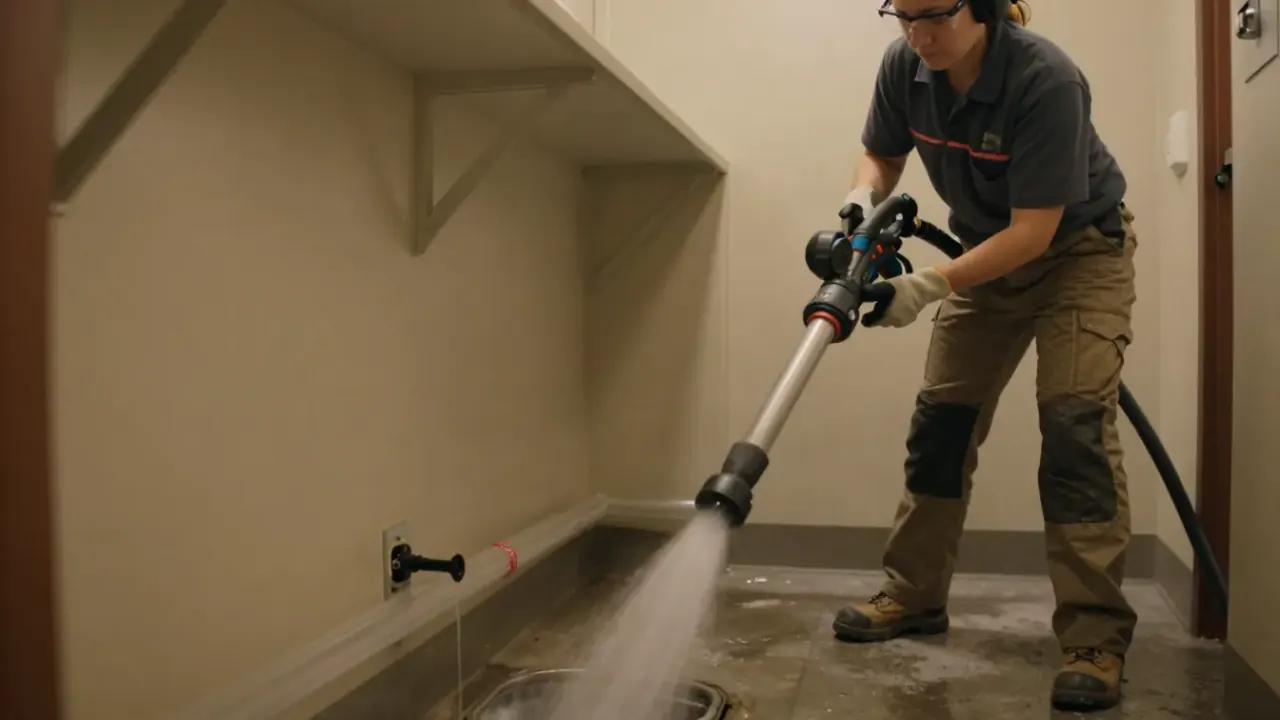 Sewer Line Hydro JettingThe flush stage of every root job. After we cut roots in Montebello, we run a high-pressure sewer jetter through the lateral to push cuttings, grease, and scale to the main. It is also the right call for recurring slow drains that are not root-related.Explore →
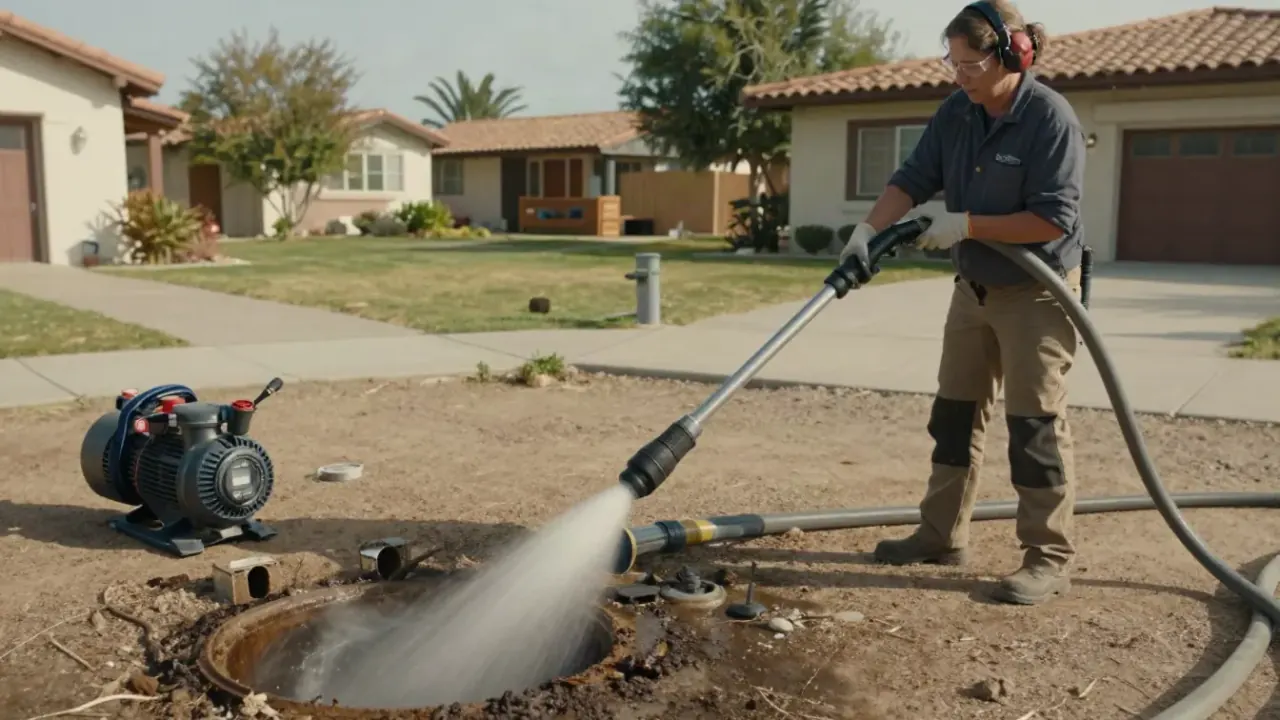 Main Line Hydro JettingWhen roots have moved past your lateral into the shared main, we jet the larger line with higher volume and a bigger nozzle. Montebello properties on older blocks often need both the lateral and the main cleared in the same visit.Explore →
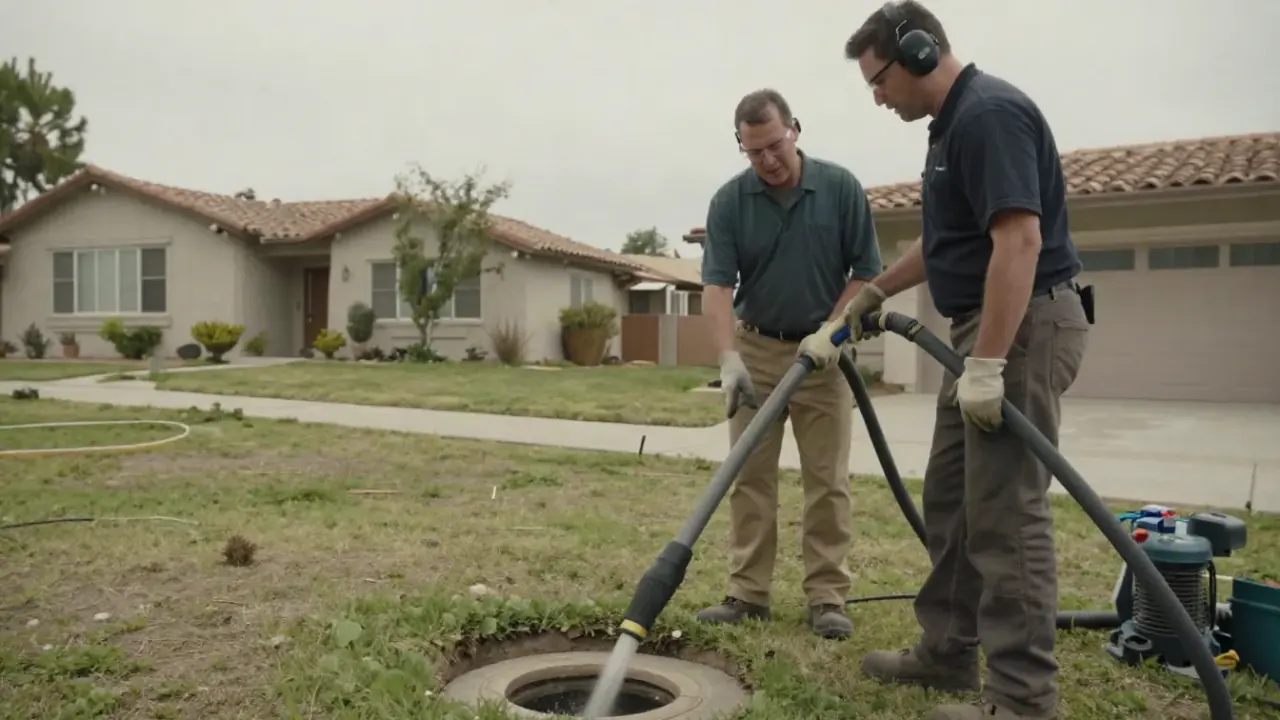 Kitchen Drain Hydro JettingRoots plus kitchen grease is the worst combination in a residential line. We jet kitchen drains in Montebello after root cutting to strip the grease film the roots were feeding on, which slows how fast they grow back.Explore →
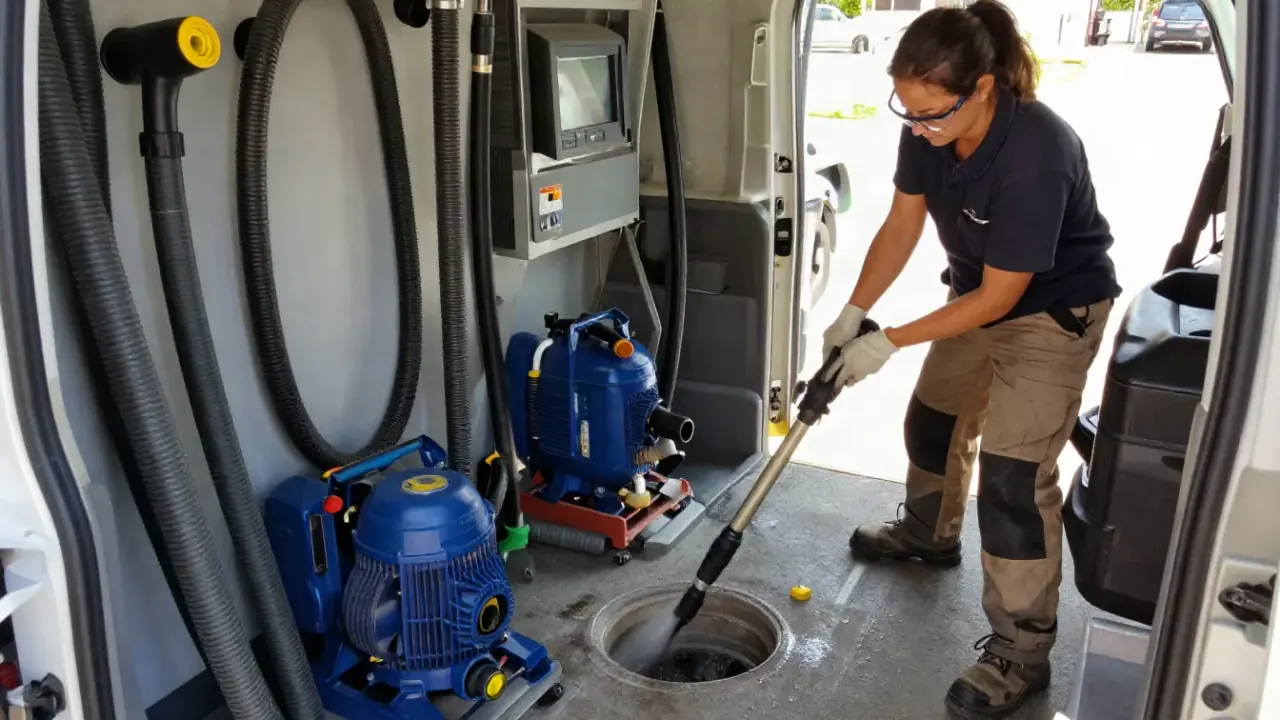 Grease Line JettingFor Montebello restaurants, root intrusion in a grease line compounds fast. We cut the roots, then jet the line with degreasing nozzles and hot water to clear the fatberg the roots were anchoring.Explore →
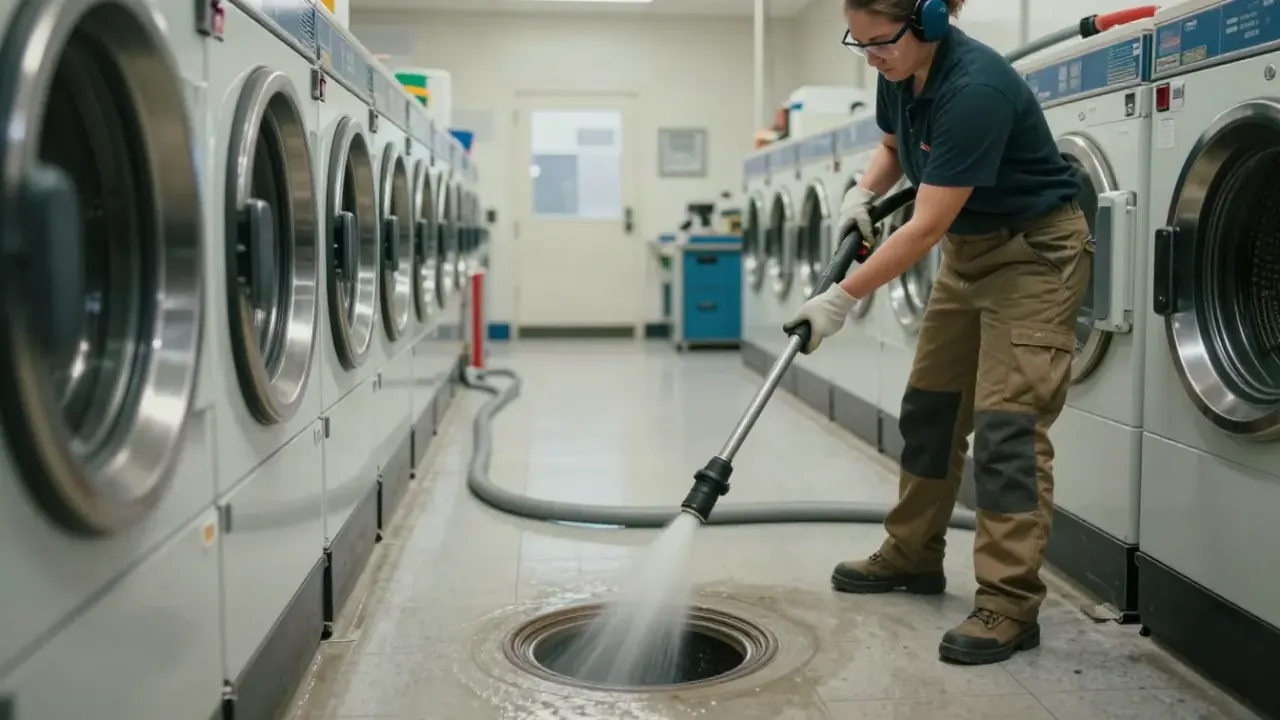 Restaurant & Commercial Hydro JettingCommercial kitchens cannot wait. We schedule root removal and jetting around your service hours, and we keep floor drains and grease interceptors on the same maintenance calendar so roots do not get a second chance.Explore →
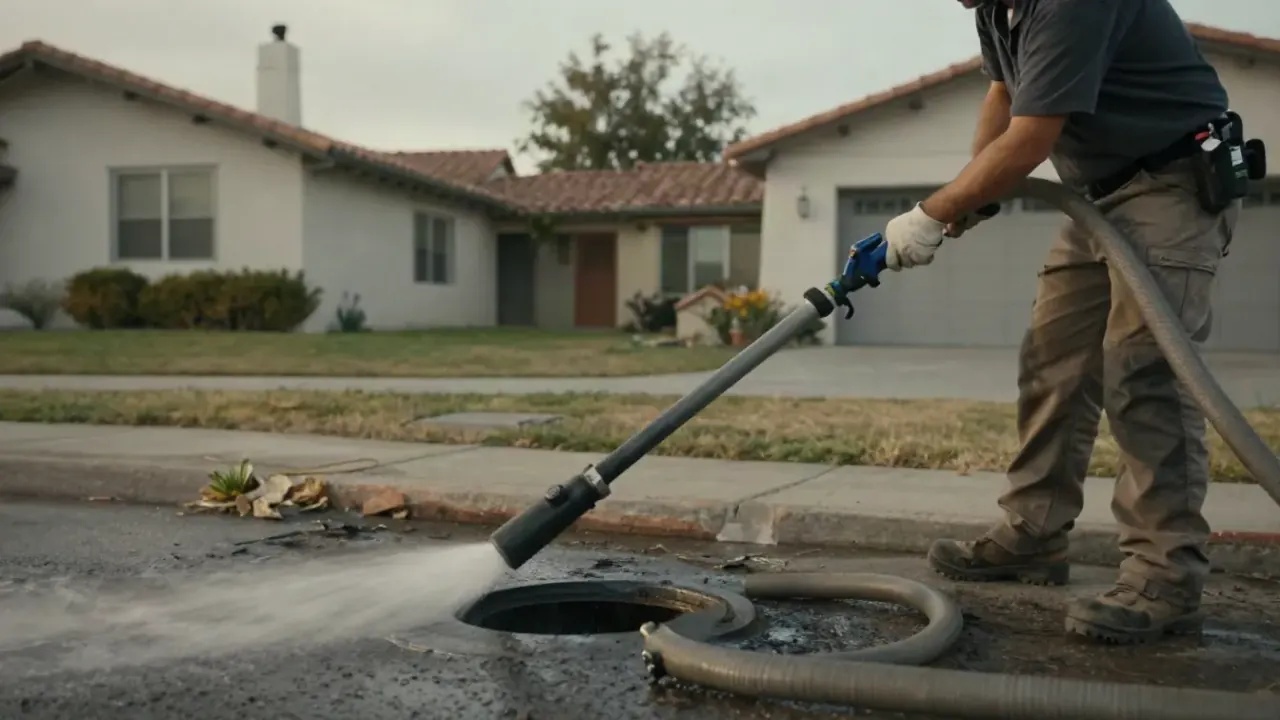 Pipe DescalingAfter roots are cut, scale and mineral deposits on the pipe walls give new roots something to grab. Descaling scours the walls back to bare pipe, which is the single best thing you can do to slow regrowth in an old Montebello lateral.Explore →
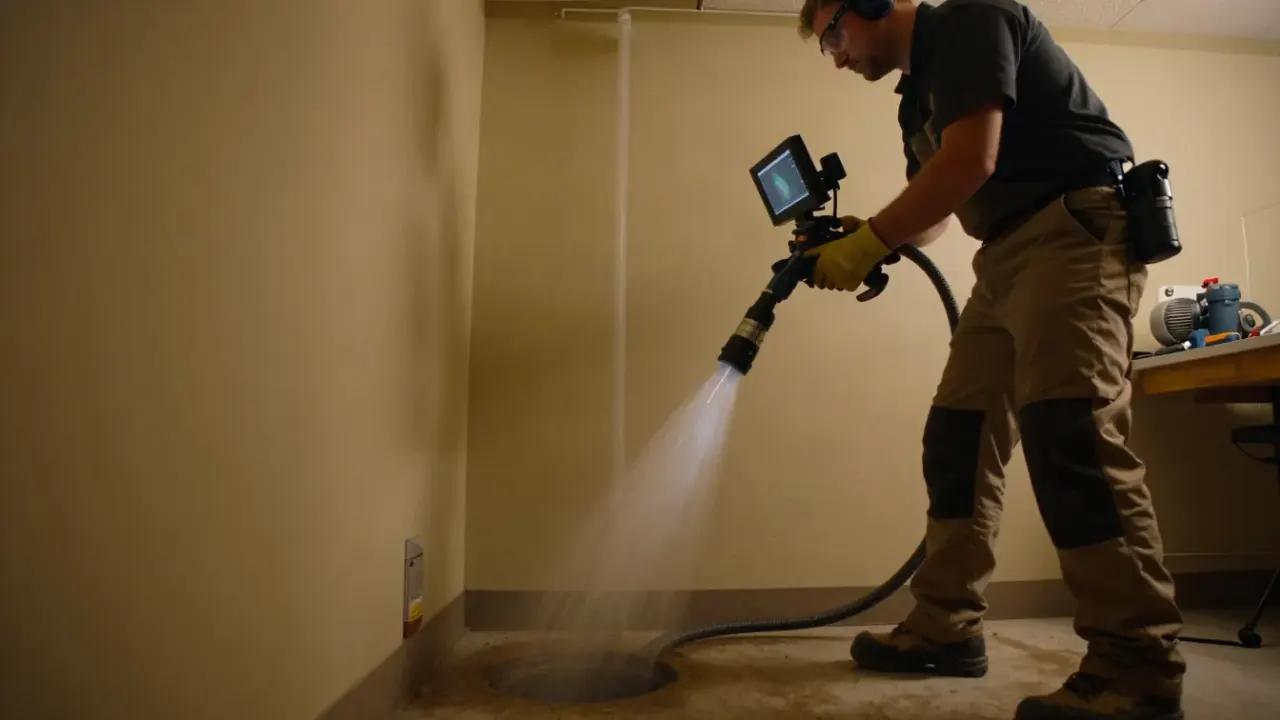 Camera Inspection Before & After JettingWe never cut blind. A sewer camera goes in first to locate the intrusion and check pipe condition, then again after jetting to confirm the line is clear. You get the recorded footage both times.Explore →
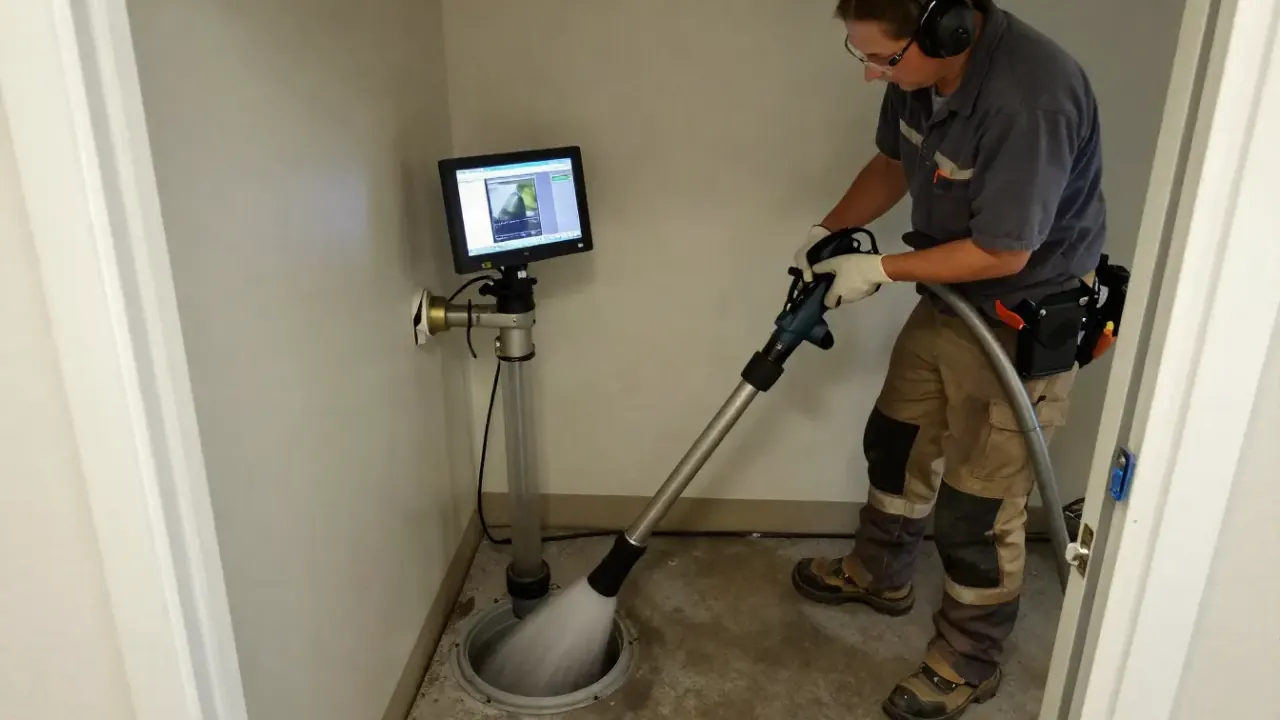 Floor Drain & Storm Drain JettingRoots travel into floor drains and storm laterals too, especially on properties with mature trees near the building line. We jet those runs with the same equipment and clear the sediment roots trap.Explore →
We are licensed, insured, and bonded, and every root job ends with camera footage you keep. Call (323) 328-8521 for same-day root cutting in Montebello, CA, or to book a camera inspection before the next backup hits.
Book Same-Day Service (323) 328-8521 →Reach us at (323) 328-8521 any time, day or night. For routine jetting we answer between 8:00 and 18:00 Monday through Friday, and emergencies get a live person around the clock. Tell us what is backing up and where, and we will give you a price range and a service window on the spot.